

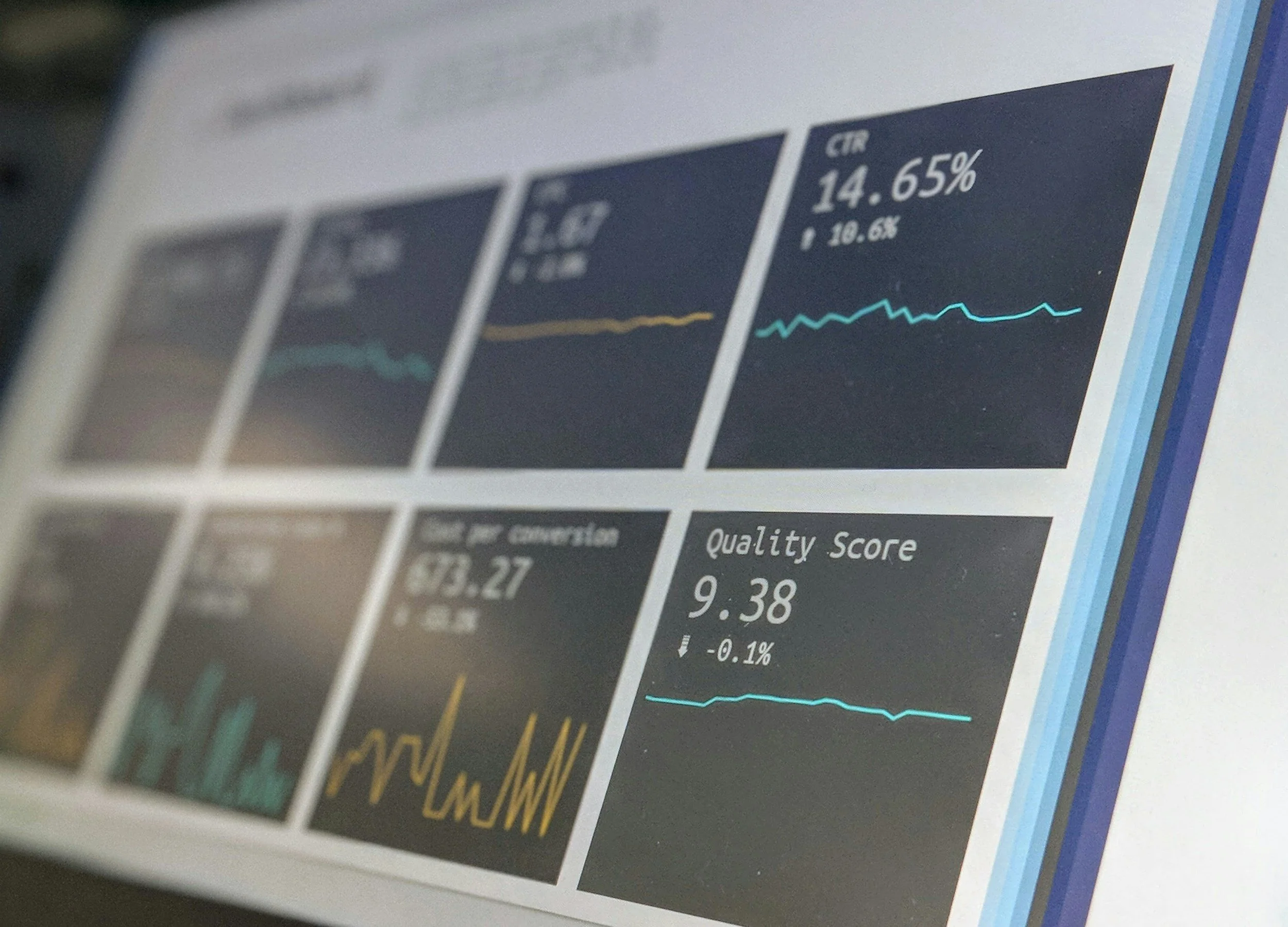
SEO, GEO, and AEO all help your business become easier to discover online, but they focus on different ways people find information.
SEO (Search Engine Optimization) helps your website appear in traditional search results. GEO (Generative Engine Optimization) focuses on your brand's visibility in responses generated by AI-powered search tools. AEO (Answer Engine Optimization) focuses on making your content useful and easy for systems to surface when answering specific questions.
The important distinction is that these approaches overlap. They are not three completely separate marketing systems, and most businesses do not need to choose just one.
For most businesses, SEO provides the foundation. GEO and AEO can build on that foundation as customers increasingly use AI-powered tools and direct-answer experiences to research products, services, and providers.
The right mix depends on how your customers search, how competitive your market is, what your website currently does well, and which business outcomes matter most.
What Is SEO?
Search Engine Optimization, or SEO, is the practice of improving your website so search engines can understand its content and show relevant pages to people searching for information, products, or services.
For example, a homeowner searching for a local plumber, a business owner researching accounting services, or a marketing director comparing agencies may all use Google to find potential providers. SEO helps your business become discoverable for relevant searches.
Effective SEO includes several connected areas.
Technical SEO: Making sure search engines can access, crawl, and index important website content. This can involve site structure, internal links, page accessibility, and resolving technical problems.
On-page SEO: Helping search engines and visitors understand each page through descriptive titles, useful headings, relevant content, and clear organization.
Content and search intent: Answering the questions your audience actually has. A page should satisfy the reason behind a search rather than simply repeat a target keyword.
Local search visibility: Helping eligible businesses appear in relevant local results through accurate business information, a well-maintained Google Business Profile, and useful location-specific content.
Authority and reputation: Building credibility through original expertise, a trustworthy online presence, and relevant references to your business.
Google's SEO Starter Guide provides a useful starting point for understanding these fundamentals.
SEO is not simply about getting more website traffic. The goal is to attract people whose needs align with your business and give them useful information that helps them decide what to do next.
What Is GEO?
Generative Engine Optimization, or GEO, focuses on improving how your business and its content appear in responses produced by generative AI systems.
People increasingly ask AI-powered tools questions such as:
Which agencies help businesses improve their online visibility?
What should I look for when choosing a commercial contractor?
Which software options fit a small business with a limited team?
How do I compare providers for a specific service?
Instead of receiving only a list of links, users may receive a synthesized answer that draws on information from multiple sources. Depending on the platform and query, the response may mention brands, summarize their offerings, or link to supporting webpages.
GEO aims to improve the likelihood that your business's relevant information can be discovered, understood, and represented accurately in these experiences.
How GEO Works in Practice
The work begins with the same fundamentals that support a strong online presence: accessible website content, clear service information, useful answers, and accurate business details.
It also involves thinking about how an AI system might understand your business in context. Is it clear what you offer, who you serve, where you operate, and what makes your approach distinct? Can your website substantiate its claims? Does the information about your business remain consistent across relevant sources?
For example, a commercial landscaping company should make its services, customer types, service areas, and project capabilities clear. If those details are vague or inconsistent, it becomes harder for people and automated systems to form an accurate understanding of the business.
Useful GEO work can include:
Publishing original, helpful content that answers real customer questions.
Making services, locations, expertise, and business details clear.
Maintaining accurate listings and other relevant business profiles.
Ensuring important website content is accessible to search systems.
Building a credible online presence through relevant, trustworthy sources.
Monitoring how your brand appears in AI-generated responses and correcting factual errors where possible.
GEO does not guarantee that an AI platform will mention, recommend, or cite your business. These systems use their own methods to select and generate responses, and visibility can vary by platform, question, location, and time.
It is also important to understand Google's current guidance. Google says the foundational SEO practices that help its search systems find and understand useful content remain relevant to AI Overviews and AI Mode. It does not require a separate set of special optimizations for inclusion in those features. You can review its guidance on AI features and your website.
In other words, GEO is not a magic set of AI-specific tricks. It is a way to think strategically about your brand's visibility in generative search experiences while continuing to build a strong, useful online presence.
What Is AEO?
Answer Engine Optimization, or AEO, focuses on making your content clear, direct, and useful for systems that respond to questions with answers.
The term has been used in different ways across the marketing industry. Some practitioners use AEO broadly to cover direct answers in search results, voice assistants, and AI tools. Others use it more specifically for answer-focused content within AI-powered experiences.
In practical terms, AEO asks: Does your content provide a clear, trustworthy answer to the question someone is asking?
Consider a business that offers estate planning services. A prospective client might search for what a will does, how a trust differs from a will, or what to prepare before meeting an attorney.
A useful page should answer the question directly, explain relevant context, and help readers understand when they may need professional advice. It should not bury the answer beneath several paragraphs of sales copy.
How to Make Content More Answer-Friendly
Start by identifying the questions your customers ask before they buy, book, or contact you. These questions may come from sales calls, customer emails, search queries, support conversations, and discussions with your team.
Then organize the content so readers can find the answer easily.
Use descriptive headings that reflect the subject being discussed. Put the main answer near the beginning of the relevant section. Explain technical terms in plain language. Use lists or step-by-step instructions when they genuinely make information easier to understand. Include relevant context, limitations, and sources for factual claims.
For example, a software company could create a page explaining what its product does, who it is designed for, which problems it solves, and how it differs from relevant alternatives. A service business could answer common questions about costs, timelines, preparation, or how its process works, provided the information is accurate and appropriate to share.
Structured data can help search engines interpret certain kinds of website information when implemented correctly, but it is not a guarantee of enhanced results or AI citations. Nor does every question require a dedicated FAQ page. The format should fit the content and the audience.
AEO is not about writing robotic, one-sentence answers to every possible question. It is about making genuinely helpful information easy to understand and use.
SEO vs. GEO vs. AEO: The Main Differences
Although the three approaches overlap, each gives you a different way to think about online visibility.
SEO: Help People Find Your Website
SEO focuses on discoverability in search engines. The work includes making your website accessible, creating relevant pages, addressing search intent, and improving how your content performs in organic search.
A useful question to ask is: Are we showing up when potential customers search for the products, services, or information we provide?
GEO: Help Your Brand Appear in AI-Generated Responses
GEO focuses on your business's visibility and representation in generative search experiences. It considers whether AI systems can find relevant information about your business and whether your brand appears accurately in generated responses.
A useful question to ask is: When people use AI tools to research our category, are they encountering accurate information about our business?
AEO: Make Your Answers Clear and Useful
AEO focuses on how effectively your content answers specific questions. It emphasizes direct explanations, logical organization, and useful information that can be surfaced in answer-focused experiences.
A useful question to ask is: Does our content clearly answer the questions customers need resolved before they make a decision?
Think of the three as complementary perspectives rather than competing services. SEO helps establish discoverability. AEO emphasizes the quality and clarity of answers. GEO broadens the focus to how a brand and its information may appear within generated responses.
The boundaries are not universally standardized, and the same improvement can support all three.
Which Does Your Business Need?
For many businesses, the answer is to start with SEO fundamentals and add GEO and AEO priorities where they support real customer behavior and business goals.
Your starting point should depend on your current situation.
If Your Website Is Hard to Find, Start With SEO
If important pages are not indexed, your website has technical issues, your service offerings are unclear, or you are not attracting relevant organic traffic, address those fundamentals first.
Review your website structure, service pages, search intent, local presence if applicable, and the quality of your content. Confirm that search engines can access the information you want people to find.
AI visibility efforts cannot compensate for a website that fails to communicate what your business does.
If Customers Research Your Category Through AI Tools, Expand Your Focus to GEO
If your audience uses tools such as ChatGPT, Gemini, Perplexity, or AI-powered search features to compare options and investigate providers, GEO may deserve a place in your strategy.
Start by testing relevant questions across the platforms that matter to your audience. Record whether your business appears, which sources are referenced, how your services are described, and whether any details are inaccurate.
Treat these checks as directional observations, not a complete measure of performance. AI responses can change between sessions, and a few manual searches cannot establish your overall visibility.
Use what you learn to identify gaps in your website content, business information, and online reputation. Prioritize accurate, useful information over attempts to manipulate a particular response.
If Your Website Has Traffic but Leaves Questions Unanswered, Prioritize AEO Principles
If people visit your website but struggle to understand your services, compare options, or find answers, improving your content may be the most useful next step.
Review your most important service pages and educational content. Are the answers easy to find? Do your headings describe the questions being addressed? Have you explained the process, limitations, and next steps?
These improvements can benefit human readers and support search visibility at the same time.
If You Serve a Local Market, Include Local Search
For businesses that rely on customers in specific locations, local search visibility may be more immediately important than a broad GEO initiative.
Make sure your business information is accurate, your service areas are clear, your Google Business Profile is maintained where applicable, and your website explains the services available in each location.
Local search is not a replacement for SEO, GEO, or AEO. It is a specific visibility need that can intersect with all three.
If Your Fundamentals Are Strong, Connect the Work
If your website is technically sound, your content is useful, and your search presence is established, focus on how the pieces work together.
Build content around customer questions and business priorities. Keep your brand information consistent. Improve the clarity of important pages. Monitor organic search performance and relevant AI-generated responses. Use what you learn to refine your content and broader marketing strategy.
You do not need to launch three separate projects with three separate content calendars. A connected strategy can address shared needs more efficiently.
How to Improve SEO, GEO, and AEO Without Creating Three Separate Strategies
The most practical approach is to identify work that supports multiple goals at once.
1. Make Your Business Easy to Understand
Explain what your business does, who it serves, what it offers, and where it operates. Use clear service descriptions and consistent business information across your website and relevant listings.
Do not rely on clever brand language alone to explain your offering. Personality matters, but people still need to understand what you actually do.
2. Create Useful, Original Content
Build content around genuine customer questions, not just lists of keywords or AI prompts. Include relevant expertise, examples you can substantiate, and explanations that help people make informed decisions.
Google's guidance on creating helpful content with generative AI emphasizes accuracy, quality, relevance, and added value. Using AI tools in a workflow does not remove the need for editorial judgment or original contribution.
3. Organize Your Website Clearly
Give important topics and services logical pages. Use descriptive headings, helpful internal links, and page titles that reflect the content. Make sure key information is available as readable text and that technical issues do not prevent access.
Avoid creating dozens of near-identical pages simply to target small keyword variations or speculative AI queries. More pages do not automatically mean more visibility.
4. Build Credibility Across Your Online Presence
Keep business details accurate. Maintain relevant listings. Make sure your public-facing descriptions reflect your actual capabilities. Seek genuine reviews where appropriate, and address factual inconsistencies when you find them.
Credibility is not something you can manufacture with a few optimized paragraphs. It develops through the quality and consistency of your business information, work, customer experience, and reputation.
5. Measure What You Can Actually Observe
For SEO, monitor relevant organic search impressions, clicks, landing pages, and meaningful conversions.
For AEO and GEO, track relevant prompts, brand mentions, citations or links where visible, the accuracy of descriptions, and changes over time. Treat these observations cautiously because platforms do not all provide the same reporting or visibility into how responses are generated.
Also watch business outcomes. More visibility is useful only when it reaches relevant people and supports your goals. Depending on your business, those goals may include qualified inquiries, sales, appointments, or stronger awareness among a defined audience.
Do not confuse a brand mention with a lead, or a citation with a sale. Measure each signal for what it tells you, then connect the findings to the broader customer journey wherever possible.
Common SEO, GEO, and AEO Mistakes to Avoid
As these terms gain attention, it is easy to spend money chasing tactics before establishing what your business actually needs.
Treating GEO as a replacement for SEO. Foundational search practices remain relevant to Google's AI-powered search features. A new label does not make sound website fundamentals obsolete.
Assuming AEO requires an FAQ page for everything. Use the format that best serves the question. A clear service page, guide, comparison, or process explanation may be more appropriate than a long list of FAQs.
Publishing content just to feed AI systems. Thin, repetitive content rarely gives customers a compelling reason to trust your business. Prioritize useful information and a genuine contribution.
Adding technical markup without a clear purpose. Structured data should accurately reflect visible content and meet the relevant search engine's requirements. It does not guarantee rankings, featured results, or AI recommendations.
Believing a single AI search test proves success or failure. Responses vary. Test a relevant set of questions, use a consistent process, and look for patterns rather than drawing conclusions from one result.
Ignoring the human audience. Your content should help real people make decisions. Optimizing for automated systems at the expense of clarity, credibility, or brand voice misses the point.
The Bottom Line: Build Visibility Around Your Customers, Not the Acronyms
SEO, GEO, and AEO describe overlapping ways to improve how your business is discovered and understood online. SEO provides the foundation. AEO encourages clear, useful answers. GEO focuses on visibility and representation in generative AI responses.
Most businesses should not treat them as three competing priorities. Start with a website that clearly communicates your value, content that answers real questions, accurate business information, and a sound measurement process. Then expand your efforts based on how your customers search and where you need greater visibility.
At Murder Marketing, our approach combines Search Engine Visibility, AI Search Visibility, Local Search and Maps, Content Marketing, Online Reputation, and the wider marketing strategy needed to connect them. We start with the people you want to reach, then use technology and data to help your brand become easier to discover and understand.
We honor original brand creative, use AI to support appropriate research and content workflows, and keep human judgment at the center of strategy. Because the goal is not to chase every new acronym. It is to help the right people find your business, understand what makes it relevant, and feel confident taking the next step.